Key takeaways
- Volunteering is the backbone of many festivals: in a German study it plays a central role at 79 % of them.
- Volunteers who want to cut back mostly cite time (62 %); lack of recognition only 9 %, per Germany's 2024 volunteer survey.
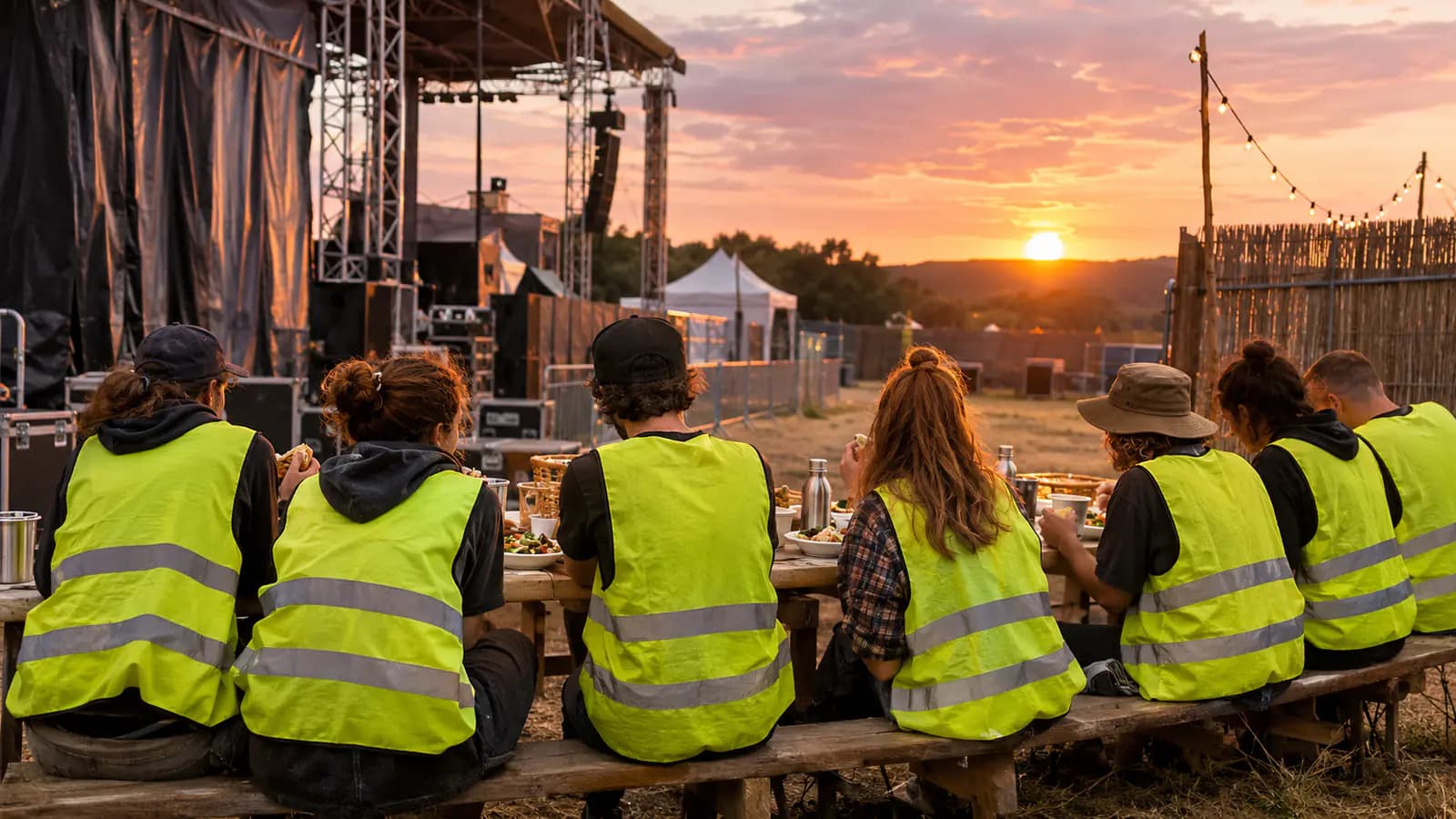
- A fair exchange means a clear task, manageable shifts, food, time to enjoy the event and real thanks.
- Plan for no-shows from the start: more confirmations than shift slots, a floater pool and fixed reminders.
- To retain volunteers, run a routine before, during and after the event – down to the invitation for the next edition.
How important are volunteers – and why are they missing?
The festival study by Initiative Musik, the Bundesstiftung LiveKultur and the German Music Information Centre (638 festivals responded) calls volunteering the backbone of the scene: it plays a central role at 79 % of festivals, popular music festivals use it more often (83 %) than classical ones (70 %), and almost every festival in small municipalities (97 %) depends on volunteers. According to hessenschau, Open Flair in Eschwege is carried by about 2,000 volunteers (2025, around 20,000 visitors), while Hurricane and Southside regularly look for paid temporary staff.
| Case (Switzerland) | What was reported |
|---|---|
| Buskers Bern, 2022 | Just over six weeks before the start, half of the 300 helpers were missing. |
| Stars in Town, Schaffhausen, 2022 | Just over 200 of 600 helpers were missing. |
| Gurtenfestival, 2022 | Many helpers from earlier years dropped out. |
| Eidgenössisches Musikfest, Biel, 2026 | Of up to 2,400 helpers needed, about a third were still missing in March; on offer were shirts, food, drinks and free local public transport. |
Why volunteers quit is shown by the German Volunteer Survey 2024: 36.7 % of people aged 14 and over volunteer (2019: 39.7 %). Of those, 16 % plan to do less or stop within a year; they cite time (62 %), feeling overburdened (22 %) and lack of recognition (9 %), multiple answers allowed. Conclusion: time and predictability weigh more than kind words. Younger people are an opportunity: 66 % of non-volunteers aged 14 to 29 are open to volunteering.
A fair exchange: what volunteers expect for their time
Volunteers trade time for an experience, and the sums have to add up for them. At Open Flair, volunteers get free access to the concerts and little else, according to hessenschau; they name community, the special atmosphere and new friendships as their reasons. The total time counts too: the Irish Times reported in 2018 that Electric Picnic volunteers in Ireland had to arrive on Thursday for a briefing and stay until Monday – about five days for a weekend ticket. So count like a volunteer: travel, briefing, shifts, departure.
| What you expect | What volunteers expect | How you deliver |
|---|---|---|
| Reliable attendance | A clear task with area, time and contact person | Confirmation with every detail, in writing |
| Staying power late at night | Manageable shifts, breaks | Four to six hours rather than eight |
| Work at the bar and entrance | Food and drink at their post | Meals at fixed times, water always free |
| Hands-on help | Time for the event itself | One free block per day, ask for must-see acts |
| Coming back | Thanks and belonging | Personal thanks, crew shirt, wrap party |
These mistakes cost you volunteers, and every one of them is avoidable:
- Unclear tasks: someone who arrives and finds nobody is frustrated before the first shift.
- Long shifts without a break: time is the most common reason to step back, according to the volunteer survey.
- Hunger and thirst: food that arrives late or does not stretch.
- No thanks: a mass message three weeks later is no substitute for a personal word.
How to find festival volunteers: channels and applications
Your own contacts are closest at hand: regulars, last year's crew, clubs and schools nearby. Tasks with safety responsibility, such as bag checks or medical cover, need professionals; how to separate the roles and find event staff is covered in the article on the event safety plan.
| Channel | Good for | How to use it |
|---|---|---|
| Your own community (newsletter, social media) | Regulars | A call with areas, dates and form link, ideally its own campaign in the event newsletter |
| Last year's crew | Experienced helpers | Ask personally and early, ask each one to bring a friend |
| Clubs and associations | Whole teams for bar, build-up, take-down | One contact per group, hand out shifts as a block |
| Schools and universities | Young helpers for the weekend | Posters, social media; for under-18s clarify first what is allowed |
| Local volunteer agencies | People looking for a volunteer role | Describe tasks, times and what they get in return |
Easy entry tasks lower the barrier: at Open Flair, handing out wristbands is where many people start volunteering. In the application, ask only what matters: days (build-up, festival, take-down), preferred areas, experience, motivation and, if minors may take part, the date of birth.
In Alpha Events you start with the volunteer template under forms: it asks for availability, areas (including “floater”), experience and motivation; you share the link or embed the form on your website. Every application triggers a confirmation email and lands in an inbox with a status; good applicants become people on your team with one click.
Onboarding: how to start your crew well
The first assignment decides whether someone comes back. With the confirmation, send everything a volunteer needs to know on the day. One real example is the staff guide of Taubertal Festival 2025: it contains phone numbers, radio channels, accreditation at the service point, camping for helpers and rules on hygiene, safety at work and alcohol on duty.
- 1Confirm immediately: in Alpha Events the confirmation email goes out automatically.
- 2Confirmation with details: area, times, meeting point, contact person, meals, what to bring.
- 3Info sheet before the event: travel, accreditation, camping, radio, phone numbers, rules.
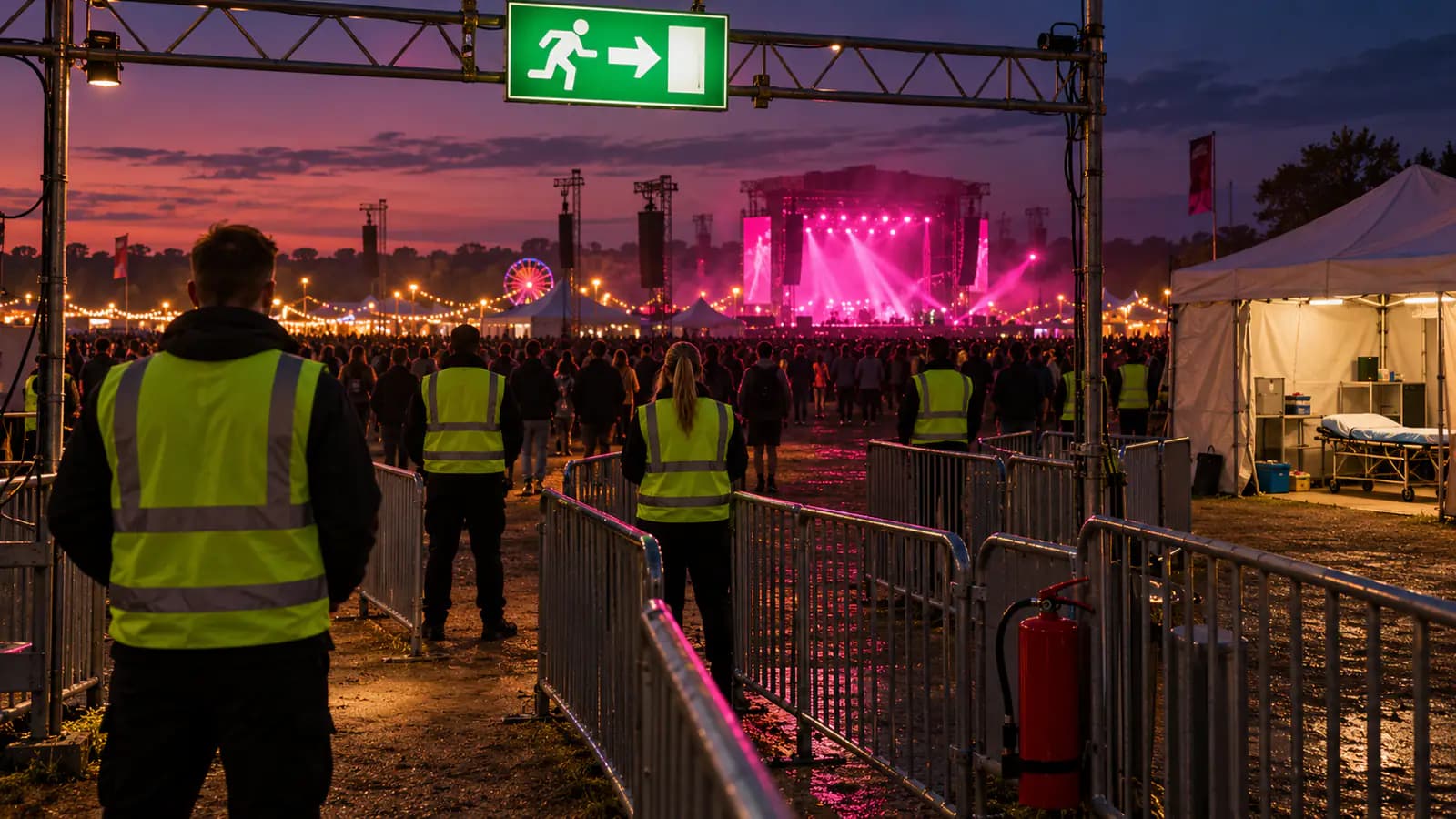
- 4Briefing on site: escape routes, assembly points, emergency chain, who decides in a crisis.
- 5Mix experienced with new: first-timers start with a buddy.
Every area needs a contact person who can be reached. In Alpha Events you attach them to each area; helpers see their shifts in the portal with area, time, role, note and the contact person's name and, if saved, phone number.
Fair shift planning: length, breaks and free time
Time is the lever you hold in your hands. These rules make a plan fair for volunteers:
- Short blocks: four to six hours instead of a twelve-hour day, with a little overlap for the handover.
- Breaks and food: fixed times, water always free.
- Distribute fairly: night, early and take-down shifts in rotation instead of always the same people.
- Free time: at least one block per day without duty, and ask for must-see acts in advance.
- Check afterwards: hours per person show whether the load was shared fairly.
In the Alpha Events shift planner you set up areas and put shifts on the timeline; gaps are visible at once. The portal only shows open shifts once you open applications – by default they are closed. When you open them, the bell rings for every crew member with portal access. You see applications on the shift and assign with one click. “Plan with AI” turns a short description into a draft with areas and open shifts that you review before anything is created.
Anyone with a shift also gets a personal guest list with two spots automatically – a small thank-you. How to build a shift plan step by step is covered in our shift planning guide; for awareness shifts, see the awareness concept article.
Preventing no-shows: reserve, reminders, floaters
You cannot prevent every cancellation and no-show, but you can plan for them. Aim for more confirmations than shift slots and use your own no-show rate from last year as the yardstick.
| Worked example | Value |
|---|---|
| Shift slots in total | 120 |
| Assumed no-show rate | 10 % |
| Confirmations needed (120 ÷ 0.9) | about 134 |
A floater pool catches the rest: helpers who are flexible and know when they are on standby. In the volunteer form you can ask for “floater” as a preferred area, and in the shift plan you create a dedicated area for them. When someone drops out, you put the floater into the open shift.
| When | What you send | Why |
|---|---|---|
| Two weeks before | Shift plan, meeting point, info sheet | Task and time are clear, cancellations come early |
| Three days before | Short reminder with travel and contact person | “Maybe” becomes “definitely” |
| On the day | Check-in at accreditation; whoever is missing triggers the call to a floater | A gap of minutes instead of hours |
Say in every message how to cancel: an early cancellation beats a silent no-show. You send the reminders through your usual channel; in the portal, volunteers see their shift and contact person at any time, and an assigned shift arrives as a notification – on the phone if push is enabled.
Keeping volunteers: a routine before, during and after the event
| Phase | What you do |
|---|---|
| 2–12 weeks before | Collect applications, send confirmations with details, build the floater pool, release the shift plan, send the info sheet |
| During the event | Short briefing each day, meals at fixed times, shift leads reachable, thanks on site |
| Right afterwards | Personal thanks within a week, photos, crew meal or wrap party |
| 2–4 weeks later | Short survey on onboarding, shift length and food, report the results back |
| Before the next edition | Write to the crew first, ask for preferred area and dates |
A link is enough for the survey: in Alpha Events surveys you adapt the questions, share the address with your crew and see the answers collected. The hours per person come as a PDF – so you know who deserves special thanks and whether some carried too much. People who come back can bring friends: ask last year's crew first.
Put it into practice with Alpha Events
The matching tools – in one platform, free to try.